
Cannabis for tendonitis actually works — topicals, tinctures, and caryophyllene-rich strains reduce tendon inflammation. DC budtender tips at MrGreen DC on Connecticut Ave.
● mrgreendc.com
4302 Connecticut Avenue NW, Washington DC
If you’re searching for cannabis for tendonitis, I’m willing to bet you’ve already tried the ibuprofen-and-ice routine and it’s not cutting it anymore. I get it. Just last month, a patient walked into our shop on Connecticut Avenue — a Capitol Hill staffer in her early forties — holding her wrist like it owed her money. De Quervain’s tenosynovitis, diagnosed eight months prior. She’d been through cortisone shots, physical therapy, even acupuncture. Nothing stuck. She asked me one question: “Is there actually a cannabis product that’ll help with this, or am I wasting my time?” She wasn’t wasting her time. And neither are you. In this post, I’m going to break down the strains, the products, the terpenes, and the approach that actually works for tendon pain — whether you’re dealing with tennis elbow, Achilles tendonitis, or chronic inflammation that just won’t quit.
Why Cannabis and Inflammation Are a Better Match Than You Think
Tendonitis is, at its core, an inflammation problem. That’s the whole game. Your tendons get irritated, the tissue swells, and your body throws inflammatory signals at the area like it’s trying to put out a fire with gasoline. Anti-inflammatory cannabis works because cannabinoids — THC and CBD in particular — interact with your endocannabinoid system’s CB2 receptors, which are heavily involved in regulating immune response and inflammation. This isn’t fringe science. There’s real peer-reviewed research showing cannabinoids reduce pro-inflammatory cytokines. That’s the mechanism. That’s why it helps.
Here’s the thing: most people think cannabis for pain means “get really high and forget about it.” That’s not what we’re talking about. For tendonitis specifically, you want targeted anti-inflammatory relief, not just a distraction from discomfort. The difference between a patient who gets real results and one who gives up after a week usually comes down to product choice and terpene profile — not just THC percentage.
The caryophyllene terpene is your best friend here. It’s the only terpene that directly binds to CB2 receptors, acting almost like a cannabinoid itself. Strains rich in caryophyllene are, in my experience behind the counter, the ones patients with chronic tendon pain keep coming back for. Myrcene helps too — it’s got its own anti-inflammatory properties and enhances how cannabinoids cross the blood-brain barrier. And linalool brings a calming quality that’s useful when pain is keeping you up at 2 AM.
Best Strains and Products for Tendon Pain: What Actually Works
I’m not going to give you a list of fifteen strains and tell you they’re all great. That’s useless. I’ll tell you what I’ve actually seen work for patients managing tennis elbow, Achilles tendonitis, and repetitive strain injuries.
Strains Worth Asking About
- Gelato Cake — Heavy in caryophyllene and limonene. This one hits inflammation hard while keeping you relaxed but not couch-locked. Patients who work desk jobs and deal with wrist or elbow tendonitis love it for evening use. Shop Gelato Cake flower
- Motorbreath — Dominant in myrcene and caryophyllene. It’s heavier, so I’d reserve it for nighttime. But for chronic Achilles tendonitis pain that keeps you from sleeping? Hard to beat. Shop Motorbreath flower
- GSC (Girl Scout Cookies) and similar hybrid profiles — Balanced caryophyllene, limonene, and linalool. Good for daytime management when you still need to function. Check our cannabis menu for current availability on similar profiles.
A quick note on CBD for pain: don’t sleep on high-CBD strains or products, especially if you’re new to medical cannabis DC. CBD is a legitimate anti-inflammatory on its own, and a 1:1 THC-to-CBD ratio can be incredibly effective for tendonitis without the intensity of a high-THC strain. I’ve seen patients who swore they needed maximum THC get better results from a balanced tincture. Egos aside, it works.
Cannabis Topicals: The Most Underrated Option for Tendonitis
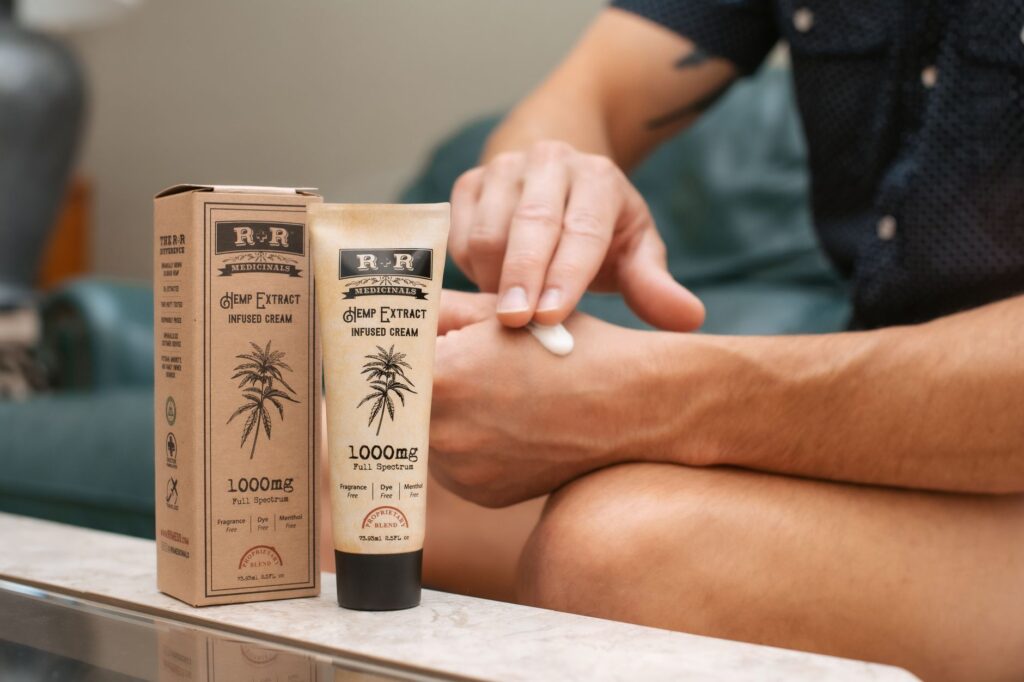
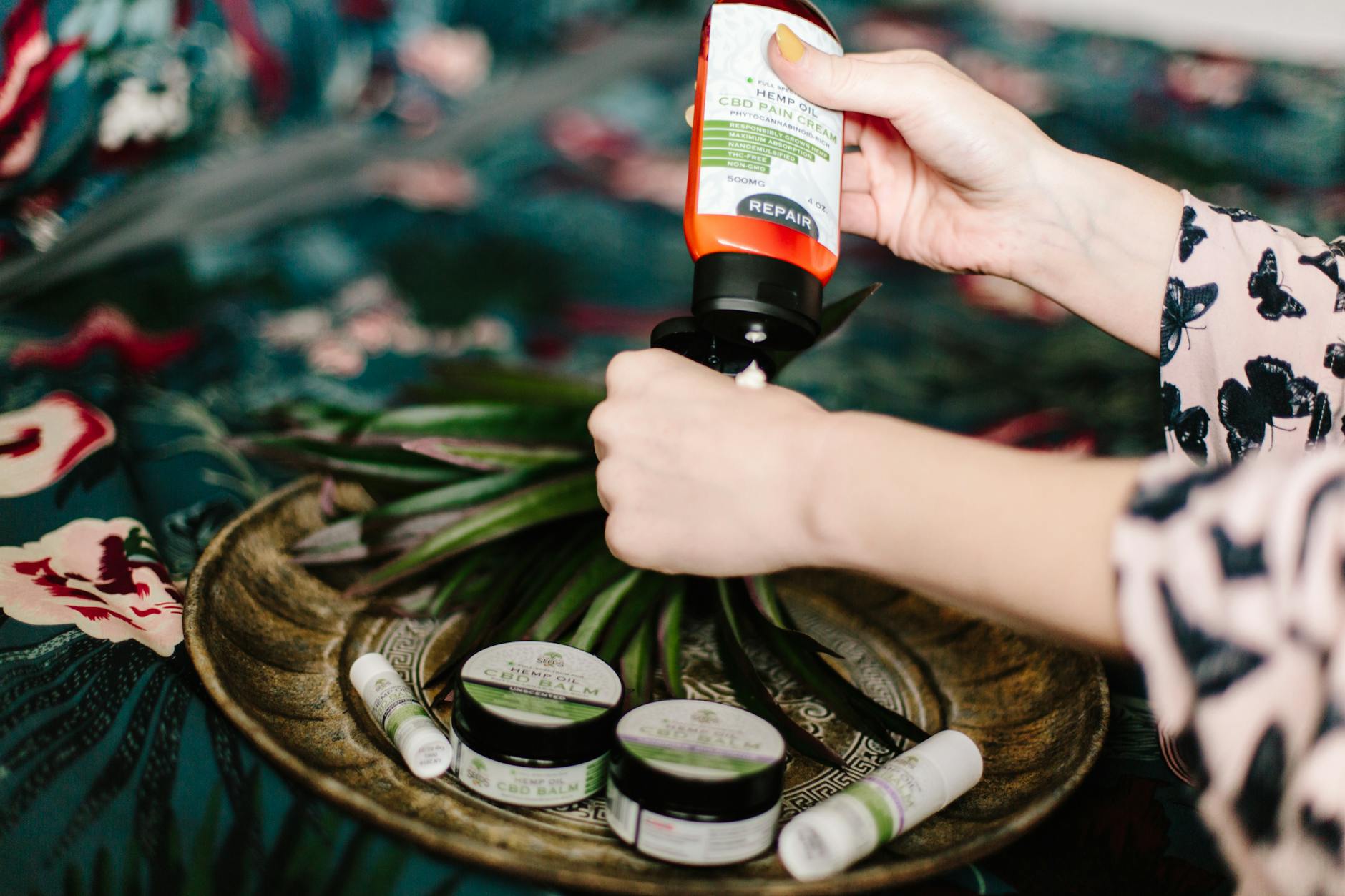
Honestly, if I had to pick one product category for tendonitis patients, it’d be cannabis topicals every single time. A good cannabis cream or cannabis salve applied directly over an inflamed tendon delivers cannabinoids right where they’re needed. They don’t get you high (no judgment, everyone asks), and they won’t show up on a drug test. You can use them at work, at the gym, before physical therapy — wherever.
The topical cannabis benefits for tendonitis are specific and practical. Your skin has its own endocannabinoid receptors. When you apply a THC- or CBD-infused topical to your elbow, wrist, or Achilles area, those cannabinoids bind locally and reduce inflammation at the site. It’s not systemic — it’s targeted. That’s a huge advantage over popping another Advil, which has to go through your entire digestive system and beat up your stomach lining along the way.
Ask us about what’s currently in stock. Product availability rotates, but we always carry topical options at our Connecticut Avenue location.
Gelato Cake
Cannabis Tinctures and RSO: Internal Anti-Inflammatory Support
Topicals handle the surface-level work. But if your tendonitis is chronic — we’re talking months of Achilles pain, or tennis elbow that flares up every time you grip a coffee mug — you probably need internal support too. That’s where a cannabis tincture or RSO (Rick Simpson Oil) comes in.
A cannabis tincture taken sublingually (under the tongue) hits faster than an edible — usually 15 to 30 minutes — and gives you systemic anti-inflammatory effects. Our Motorbreath double-strength tincture is a patient favorite for pain management. The Motorbreath profile is loaded with myrcene and caryophyllene, which is exactly the combination you want for chronic inflammation.
RSO is the heavier option. It’s a full-spectrum extract, meaning you get the complete range of cannabinoids and terpenes working together. Our RSO syringe (500mg) is popular with patients dealing with more severe or long-standing tendon pain. Start with a rice-grain-sized dose. Seriously, start small. RSO is potent and the effects last hours.
What Cannabis Products Are Good for Pain — the Layering Approach
The most effective approach I’ve seen for cannabis for tendonitis isn’t picking one product. It’s layering. Apply a cannabis salve directly on the inflamed tendon in the morning. Use a tincture at night for systemic relief and better sleep. If pain spikes during the day, a vaporizer cartridge with a caryophyllene-rich strain gives you fast-acting relief in minutes. That combination — topical plus internal plus on-demand — covers all your bases without turning you into a zombie.
I had a regular who delivers packages all over the U Street Corridor and Shaw neighborhoods. Achilles tendonitis from being on his feet twelve hours a day. He started with just flower and it helped, but the relief didn’t last his whole shift. Once we added a topical for the morning and a low-dose tincture at night, he told me it was the first time in a year he didn’t dread getting out of bed. That’s not a miracle — that’s just using the right tools together.
Want to learn more about how terpenes drive these effects? Check out our cannabis terpenes guide for a deeper breakdown of each one and what it does.
Getting Your Medical Cannabis DC Card: It’s Easier Than Your Tendonitis
Look, if you’re in DC and you don’t have your medical card yet, there’s genuinely no reason to wait. The ABCA medical cannabis program — that’s the Alcoholic Beverage and Cannabis Administration, DC’s regulatory body — makes it almost absurdly simple.
Here’s what you actually need to do:
- Be 21 or older
- Go to the ABCA website
- Self-certify online (seriously, two minutes)
- No doctor visit required
- No fee
That’s it. DC uses a self-certification model, which means you attest to having a qualifying condition. Chronic pain — including tendonitis — absolutely counts. You don’t need a physician’s letter. You don’t need a specialist referral. You fill out the form, get your card, and you’re a legal medical marijuana DC patient.
And here’s the part that matters most to a lot of my patients, especially the ones working federal-adjacent jobs in Dupont Circle or near Capitol Hill: ABCA does not share your patient data with employers, federal agencies, or anyone. Your registration is protected. Your employer won’t know (yes, even your employer won’t know). There’s zero career risk from getting your card. I can’t stress this enough, because it’s the number one concern I hear behind the counter, and the answer is always the same — your information is private, period.
Once you’ve got your card, you can shop at any licensed medical dispensary in Washington DC, including ours on Connecticut Avenue NW.
Common Mistakes Patients Make with Cannabis for Tendonitis
After six years working in the DC cannabis industry, I see the same mistakes over and over. Let me save you some time and money.
Mistake #1: Only Smoking Flower and Expecting Localized Relief
Flower is great for systemic effects — mood, sleep, general pain reduction. But if your specific problem is an inflamed Achilles tendon or a throbbing elbow, you need something topical hitting that exact spot. Inhaling cannabis alone for tendonitis is like taking an aspirin for a broken bone. It’ll take the edge off, but you’re not addressing the site.
Mistake #2: Ignoring Terpenes and Chasing THC Percentages
The most common question I get behind the counter is “what’s the highest percentage you’ve got?” For tendonitis, that’s the wrong question entirely. A 20% THC strain with dominant caryophyllene and pinene will outperform a 30% THC strain with no anti-inflammatory terpene profile. Every time. Read the terpene labels or ask your budtender. That information matters more than the number on the jar.
Mistake #3: Giving Up After Two Days
Cannabis for tendonitis isn’t a one-and-done situation. Inflammation that’s been building for months doesn’t vanish overnight. Most patients I work with start noticing real, consistent improvement after a week or two of regular use — especially with the layered approach I described above. Give it time. Adjust dosing. Ask questions. That’s what we’re here for.

If you’ve been dealing with tennis elbow, De Quervain’s, Achilles tendonitis, or any kind of chronic tendon pain, cannabis for tendonitis isn’t some long-shot experiment — it’s a practical, real-world option that DC medical patients are using right now with solid results. The right strain, the right product type, and a little guidance from someone who’s actually worked with patients in your situation makes all the difference.
We’re at MrGreen DC on Connecticut Avenue NW, and our budtenders are ready to help you find exactly what works for your pain. Stop by our dispensary, or if your tendonitis makes the trip tough, we offer cannabis delivery across DC — including Dupont Circle, Capitol Hill, Shaw, and beyond. Bring your questions. That’s literally what we’re here for.