
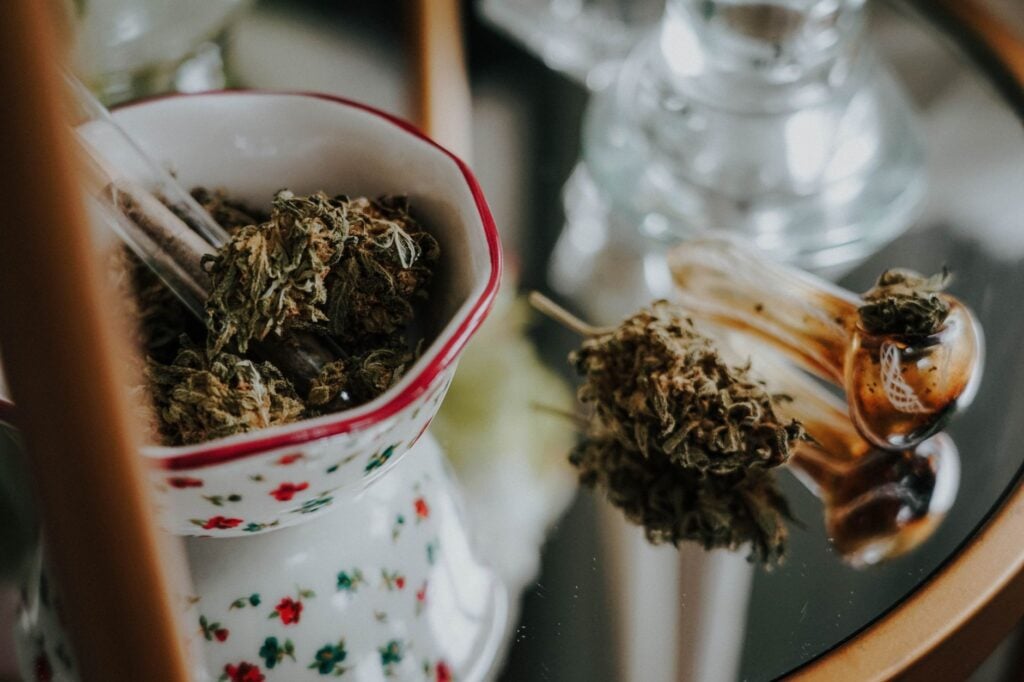
Cannabis for bipolar disorder: DC budtender breaks down the best strains, tinctures, and microdosing tips for mood stabilization. Visit MrGreen DC on Connecticut Ave.
● mrgreendc.com
4302 Connecticut Avenue NW, Washington DC
If you’re researching cannabis for bipolar disorder, you’re not alone — and you’re not crazy for asking. I get patients at our cannabis dispensary on Connecticut Avenue every single week who are managing some form of bipolar spectrum condition and want to know if cannabis can help stabilize their moods without the side effects their pharmaceuticals cause. The honest answer is: it can, but only if you’re smart about it. The wrong strain, the wrong dose, or the wrong timing can make things worse. This post is everything I’ve learned from six years in the DC medical cannabis scene about helping patients with bipolar disorder find relief — from manic episodes to depressive crashes to the emotional dysregulation that nobody warns you about.
I had a patient come in a few months ago — a Capitol Hill staffer in her 30s, diagnosed bipolar II. She’d been prescribed lithium but hated the brain fog, the weight gain, the feeling of being wrapped in cotton. She wasn’t trying to replace her meds (and I’d never tell anyone to do that). She wanted something to take the edge off the depressive episodes that her medication wasn’t fully covering. We found a balanced THC CBD approach that genuinely changed her day-to-day. That’s the kind of conversation I want to have here.
Why Cannabis and Mental Health Is So Complicated for Bipolar Patients
Here’s the thing: bipolar disorder isn’t one mood. It’s a cycle. You’ve got manic episodes where your brain is running at 200 miles per hour, depressive episodes where getting out of bed feels impossible, and sometimes rapid cycling that swings you between both in the same week. Cannabis interacts differently with each state, and that’s where people get into trouble.
High-THC sativa strains during a manic phase? Terrible idea. THC can amplify racing thoughts, paranoia, and impulsivity — exactly the things you’re already fighting. But the same plant, used differently during a depressive episode, might be the thing that gets you out of bed and functioning. The key word here is differently. Cannabis and depression have a nuanced relationship, and so do cannabis and anxiety. You can’t treat bipolar like it’s one condition with one solution.
What most people don’t realize is that terpenes matter just as much as THC and CBD ratios for mood regulation. Linalool (the same compound that makes lavender calming) and myrcene both promote relaxation without sedation at the right dose. Limonene, found in citrus-forward strains, has genuine mood-elevating properties that research backs up. Our terpenes guide breaks this down in detail.
Best Indica Strains and Balanced THC CBD Products for Mood Stabilization
I’m going to give you actual opinions here because I think you deserve them.
For depressive episodes, a balanced THC CBD strain is almost always better than a pure THC strain. You want enough THC to shift your mood without triggering anxiety or racing thoughts. A 1:1 or 2:1 THC-to-CBD ratio is the sweet spot for most bipolar patients I’ve worked with. CBD for anxiety works partly because it modulates how THC hits your CB1 receptors — it’s basically a built-in safety net.
For nighttime use or when you’re in an agitated mixed state, indica strains with high myrcene and caryophyllene content are your best friends. Caryophyllene actually binds to CB2 receptors and has anti-inflammatory properties, which is relevant because neuroinflammation plays a role in bipolar mood episodes. The most common question I get behind the counter from bipolar patients is “what won’t make me feel more out of control?” and the answer is almost always a heavy indica or a balanced hybrid.
Some specific picks from our cannabis menu:
- Gelato Cake — An indica-dominant strain loaded with caryophyllene and limonene. Great for depressive episodes and cannabis and sleep issues. Relaxes without total couch-lock.
- Purple Urkle — Deep indica, heavy myrcene profile. This one’s for when the agitation won’t stop and you need your nervous system to just quit. Evening use only.
- Sundae Driver — A balanced hybrid that leans calming without being sedating. Patients with rapid cycling tend to like this one because it doesn’t push you in either direction too hard.
For sleep specifically (and cannabis and sleep is a huge topic for bipolar patients because disrupted sleep can trigger manic episodes), look into products with CBN. CBN is a cannabinoid that forms as THC ages, and it’s mildly sedating on its own. Combined with myrcene-heavy flower, it can help reset a sleep cycle that mania has destroyed.
Cannabis Tincture, Sublingual Cannabis, and Why Microdosing Cannabis Changes Everything
Honestly, if you’re managing bipolar disorder with cannabis, smoking flower probably shouldn’t be your only method. Inhaled cannabis hits fast and hard, which is great for acute relief but terrible for consistent mood management throughout the day.
That’s where a cannabis tincture comes in. Sublingual cannabis — you drop it under your tongue, hold for 60 seconds, and the cannabinoids absorb through the tissue under your tongue — gives you onset in about 15-20 minutes with effects that last 4-6 hours. It’s predictable. It’s discreet. And most importantly, it’s doseable down to the milligram.
Our Motorbreath double-strength tincture is one I recommend regularly for patients who need serious, consistent dosing. You can dial it down to 2.5mg of THC per dose if you’re microdosing cannabis, or take a full dropper when you’re in a depressive trough and need stronger relief.
How Microdosing Cannabis Helps with Emotional Dysregulation
Microdosing cannabis means taking sub-perceptual or barely perceptual doses — typically 1-5mg of THC — throughout the day. You’re not trying to get high. You’re trying to keep your endocannabinoid system topped up so your mood stays more even. Think of it like a mood thermostat instead of a mood switch.
For emotional dysregulation (which is basically the bipolar symptom nobody talks about — the irritability, the crying jags, the rage that comes out of nowhere), microdosing a balanced THC CBD tincture has been the single most effective cannabis strategy I’ve seen. Not the highest THC flower. Not edibles that hit like a truck two hours later. Consistent, low-dose sublingual cannabis.
One practical tip: keep a mood journal when you start. Seriously. Just three words in your phone — date, dose, mood. After two weeks, patterns emerge that’ll tell you exactly what dose range works for your depressive episodes versus your stable periods. Don’t skip this step (yes, it sounds tedious, but it’s the difference between guessing and knowing).
Cannabis Drug Interactions and Working with Your Psychiatrist
I need to talk about this because it matters. Cannabis drug interactions are real, and if you’re on psychiatric medication for bipolar disorder, you need to be aware of them.
THC and CBD are both metabolized by the cytochrome P450 enzyme system in your liver — the same system that processes lithium, valproic acid, lamotrigine, and most antipsychotics. CBD in particular can inhibit CYP3A4 and CYP2D6 enzymes, which means it can increase the blood levels of certain medications. That’s not theoretical. That’s pharmacology.
Does that mean you can’t use cannabis? No. It means you need to tell your psychiatrist. I know that’s uncomfortable (no judgment, everyone worries about this). But a good psychiatrist would rather know and help you use cannabis safely than find out when your medication levels are off. If your doctor dismisses you entirely, find one who’s willing to have the conversation — there are plenty in the Dupont Circle and Logan Circle areas who work with medical cannabis patients regularly.
Look, I’m a budtender, not a doctor. Cannabis for bipolar disorder should be an addition to your treatment plan, not a replacement for it. I’ve seen patients try to white-knuckle bipolar with nothing but weed, and it doesn’t end well. The best outcomes I see are patients who use cannabis as one tool alongside therapy, medication management, and lifestyle stuff like sleep hygiene.
Getting Your Medical Cannabis Card in DC — It’s Easier Than You Think
If you’re in DC and you don’t have your medical marijuana card yet, there’s genuinely no reason to wait. The ABCA medical cannabis program uses a self-certification process. You don’t need a doctor’s visit. You don’t need a diagnosis letter. You don’t need to pay a fee. If you’re 21 or older, you go to the ABCA website, self-certify, and you’re done (seriously, two minutes).
The biggest concern I hear from patients — especially federal employees in the Shaw and Capitol Hill neighborhoods — is about privacy. Here’s what you need to know: the ABCA (Alcoholic Beverage and Cannabis Administration) does not share your patient data with employers, federal agencies, or anyone else. Your registration is protected. There’s zero career risk from getting your medical marijuana card in DC. None. I’ve had patients from every three-letter agency in this city come through our door, and not one has had an issue.
Having your card means you can access a licensed medical dispensary in Washington DC where products are tested, labeled, and sold by people who actually know what they’re talking about. That matters a lot when you’re dealing with a condition as sensitive as bipolar disorder.
Cannabis Wellness Beyond Just the Strain
Your cannabis wellness routine for bipolar management should consider timing as much as product choice. Use energizing balanced hybrids during the day only if you’re in a depressive phase. Switch to indica strains or CBD-dominant products in the evening. If you’re in a manic or hypomanic episode, reduce your THC intake significantly or stick to CBD-only for a few days. Don’t chase the mania — it feels productive, but it’s not.
Sleep is everything. Disrupted sleep is the number-one trigger for manic episodes in most bipolar patients, and cannabis and sleep management go hand in hand. A consistent nighttime dose of an indica tincture or a myrcene-heavy flower 30-45 minutes before bed can help stabilize your circadian rhythm in ways that support your overall mood management.

Using cannabis for bipolar disorder takes more intention than most other conditions I help patients with. You can’t just grab whatever’s on sale and hope for the best. But with the right strain, the right delivery method, the right dose, and honest communication with your healthcare team, cannabis can be a genuinely useful part of managing this condition. I’ve seen it work. I’ve seen it matter.
If you’re ready to have a real conversation about what might work for your specific situation, come see us at MrGreen DC on Connecticut Avenue NW. We’ll walk through your symptoms, your current medications, and your goals — no rush, no pressure. And if you’re anywhere in DC — Adams Morgan, U Street, Navy Yard, wherever — we offer cannabis delivery throughout DC straight to your door. Shop Now — MrGreen DC menu or contact us with questions. We’re here for you.