
Cannabis for osteoarthritis can reduce joint pain, stiffness, and inflammation. DC budtender breaks down the best strains, topicals, and tinctures. Visit MrGreen DC.
● mrgreendc.com
4302 Connecticut Avenue NW, Washington DC
If you’re researching cannabis for osteoarthritis, you’re probably dealing with pain that doesn’t take days off. I get it. Just last month, a retired postal worker came into our dispensary on Connecticut Avenue and told me she’d been living on ibuprofen for three years — breakfast, lunch, and dinner — because her knees were bone-on-bone. She didn’t want to smoke anything. She didn’t know where to start. Twenty minutes later, she walked out with a cannabis tincture and a topical, and she came back two weeks later saying she’d cut her NSAID use in half. That’s not a miracle. That’s just the right product matched to the right problem, which is exactly what I’m going to walk you through in this post.
Why Cannabis and Chronic Pain From Osteoarthritis Actually Make Sense Together
Osteoarthritis isn’t just “getting old.” It’s cartilage breaking down until you’ve got bone grinding on bone, swollen joints, stiffness that makes getting out of bed feel like a project. The inflammation is constant. Standard treatments — acetaminophen, NSAIDs, cortisone shots — they help, but they come with their own baggage. Liver stress, stomach ulcers, diminishing returns on steroid injections. That’s where anti-inflammatory cannabis enters the conversation.
Cannabis works on your endocannabinoid system, which plays a direct role in pain signaling and inflammatory responses. THC binds to CB1 receptors in the central nervous system and dials down pain perception. CBD interacts with CB2 receptors concentrated in immune tissue and helps modulate inflammation at the joint level. You don’t have to pick one or the other — in fact, you shouldn’t. The most effective approach for osteoarthritis patients I’ve seen behind the counter uses both THC and CBD together, usually in a ratio that leans heavier on CBD during the day and allows more THC at night for sleep.
Honestly, the most common question I get from patients over 55 is some version of “will this actually work, or is it just hype?” It works. The research on cannabis and inflammation is solid enough that even the Arthritis Foundation has acknowledged cannabinoids as a legitimate area of interest. But the how matters enormously — wrong product, wrong dose, wrong expectations, and you’ll think it’s snake oil. Stick with me here.
Best Strains and Terpenes for Joint Pain, Stiffness, and Bone-on-Bone Pain
Strain names are fun marketing, but what actually matters for osteoarthritis relief are the terpenes and the cannabinoid profile. Let me break down what to look for.
Caryophyllene is your best friend here. It’s the only terpene that directly binds to CB2 receptors, giving it genuine anti-inflammatory properties — not just anecdotal, but demonstrated in peer-reviewed studies. Strains heavy in caryophyllene tend to have a peppery, spicy nose. Gelato Cake is one I recommend constantly for pain patients. It’s got that caryophyllene backbone with enough myrcene to add a sedative, body-heavy quality that loosens up stiff joints.
Myrcene amplifies THC’s effects and adds muscle-relaxing properties. If your osteoarthritis causes you to tense up around the affected joint (and it does — your body compensates unconsciously), myrcene-dominant strains help release that guarding tension. Linalool, the same terpene that gives lavender its scent, offers analgesic and anti-anxiety effects that matter a lot when chronic pain has you stressed and sleep-deprived.
Here’s what I’d actually put in your hands:
- Gelato Cake — heavy caryophyllene and myrcene, indica-leaning, excellent for nighttime joint pain and stiffness
- Motorbreath — potent, gassy, loaded with caryophyllene, best for severe bone-on-bone pain when you need real relief
- Purple Urkle — myrcene-forward classic that’s gentle enough for cannabis seniors or anyone new to medical cannabis
- Sundae Driver — balanced hybrid with limonene for mood lift plus enough body effect to ease daytime stiffness
One strain I’d avoid for osteoarthritis? Anything that’s pure sativa with high pinene and zero myrcene. You’ll get cerebral stimulation but almost no body relief. That’s not what bone-on-bone pain needs.

Caryophyllene
What Cannabis Products Are Good for Pain: Topicals, Tinctures, and RSO
Not everyone with osteoarthritis wants to inhale something. Totally fair. The good news is that some of the most effective cannabis for osteoarthritis products don’t involve your lungs at all.
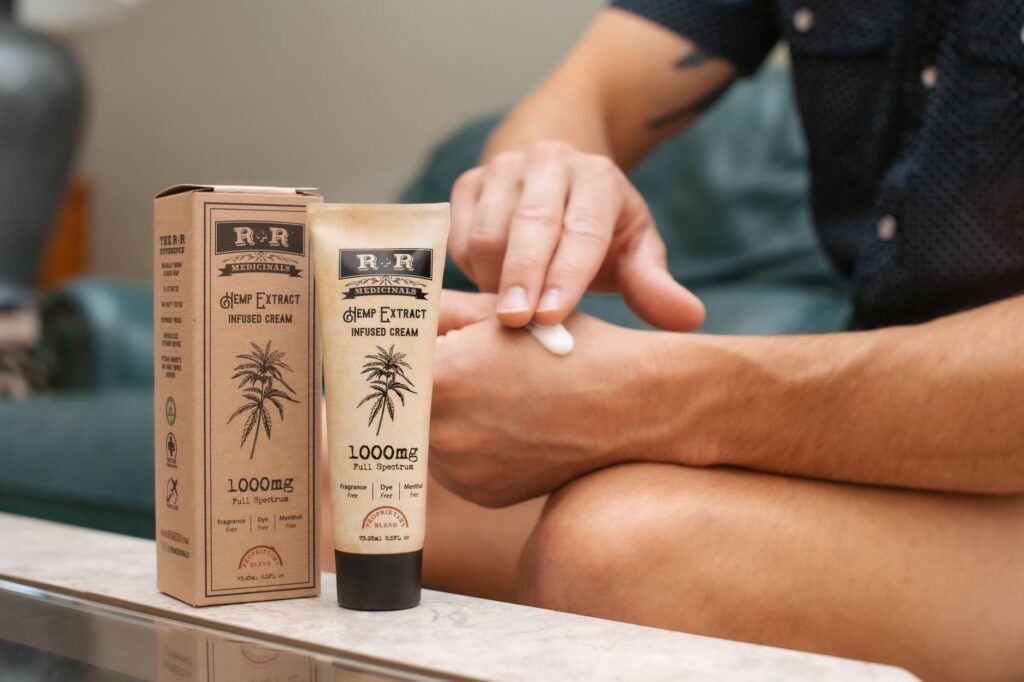
Cannabis Topicals and Cannabis Cream for Targeted Joint Relief
A good cannabis cream or balm applied directly to the knee, hip, or hands can deliver localized relief without any psychoactive effect (yes, even your employer won’t know). Cannabis topicals work because cannabinoid receptors exist in skin tissue and joint capsules. You’re not getting high — you’re getting anti-inflammatory compounds exactly where the degeneration is happening. For hands and knees especially, I tell patients to apply a thick layer, rub it in for about 30 seconds, and give it 15–20 minutes. Reapply as needed. There’s no overdose risk with topicals.
Cannabis Tincture for Sustained, Systemic Relief
If your pain is in multiple joints or if the stiffness is bodywide when you wake up, a cannabis tincture taken sublingually gets cannabinoids into your bloodstream within 15–30 minutes and lasts 4–6 hours. Our Motorbreath double-strength tincture is what I hand to patients who’ve tried lower doses without enough relief. Start with half a dropper under the tongue, hold it for 60 seconds, then swallow. You can always take more in an hour, but you can’t un-take a dose that was too strong.
RSO: The Heavy Hitter for Severe Cartilage Degeneration
For patients dealing with advanced osteoarthritis — the kind where cartilage is mostly gone and every step is a negotiation — RSO (Rick Simpson Oil) is worth a serious conversation. It’s a full-spectrum extract with high THC concentration. A rice-grain-sized dose taken orally can provide hours of deep pain relief. We carry both 500mg and 2500mg RSO syringes. I’ll be straight with you: RSO is potent. If you’re new to cannabis, start with tinctures or topicals first and work your way up.
Can Seniors Use Medical Cannabis Safely?
This is a question I hear at least three times a week, and the answer is yes — with some caveats. Cannabis for senior citizens is one of the fastest-growing patient categories in DC’s medical program. Older patients tend to do best with lower THC doses, CBD-forward products, and non-inhalation methods like tinctures and topicals. If you’re on blood thinners or blood pressure medication, talk to your doctor about potential interactions (no judgment, everyone should). But the idea that cannabis is “too strong” for someone over 65 is a myth I’m happy to personally dismantle. Most of my patients over 60 use less than younger patients and get better results because they’re consistent and they follow dosing guidance.
How to Use Cannabis for Osteoarthritis: A Practical Layering Strategy
Here’s the thing: the patients who get the best results from cannabis for osteoarthritis don’t rely on a single product. They layer. Here’s a real-world protocol I’ve helped patients build:
- Morning: Apply cannabis topical directly to the stiffest joints. This helps with that brutal morning stiffness before you’ve even had coffee.
- Midday: A low-dose CBD-dominant tincture if inflammation is flaring. Keep it subtle — you’ve got stuff to do.
- Evening: A THC-forward tincture or a few puffs of a caryophyllene-rich indica like Gelato Cake. This is when you address pain head-on and set yourself up for restorative sleep.
- As needed: Reapply topical whenever a specific joint acts up. There’s no limit.
This layered approach uses CBD for pain management during functional hours and reserves stronger THC products for when comfort and sleep are the priority. It’s not complicated, but it’s effective — and it’s a lot kinder to your stomach lining than popping Advil six times a day for years on end.
Does cannabis replace physical therapy or joint replacement surgery? No. But it can make the months or years leading up to a procedure far more bearable, and it can absolutely reduce dependence on pharmaceutical painkillers. Several of my patients in the Dupont Circle and Logan Circle neighborhoods have used cannabis to step down from opioid prescriptions entirely, with their doctors’ knowledge and support.
Getting Your Medical Cannabis Card in DC: It’s Easier Than You Think
If you don’t have your DC medical cannabis card yet, there’s genuinely no reason to wait. The process is managed by the ABCA (Alcoholic Beverage and Cannabis Administration), and it’s self-certification — meaning you don’t need a doctor’s visit, a diagnosis letter, or a referral. You go to the ABCA website, confirm you’re 21 or older, fill out the form, and you’re done (seriously, two minutes). There’s no fee.
I know the concern that stops a lot of people, especially folks still working or with federal connections here in DC. So let me be clear: ABCA does not share your patient data with employers, federal agencies, or anyone. Your registration is confidential. Your career is not at risk. This is specifically designed to protect patients, and it does. If you’re dealing with age-related arthritis and you’ve been managing it with over-the-counter painkillers alone, a medical card opens the door to products that can actually change your quality of life.
Need help figuring it out? Our team walks patients through the process every single day. Check out our step-by-step guide to getting a DC med card or just stop by and ask.

Look, cannabis for osteoarthritis isn’t some fringe idea anymore. It’s what real patients in real pain are using every day in DC — from Capitol Hill to Columbia Heights — to reclaim mobility, reduce inflammation, and sleep through the night without waking up in agony. The key is getting the right product, the right dose, and honest guidance from someone who’s seen what works. That’s what we do at MrGreen DC. Come see us at our dispensary on Connecticut Avenue in Northwest DC, browse our menu, or order cannabis delivery straight to your door anywhere in DC. Your joints have been through enough — let’s get you some real relief.