
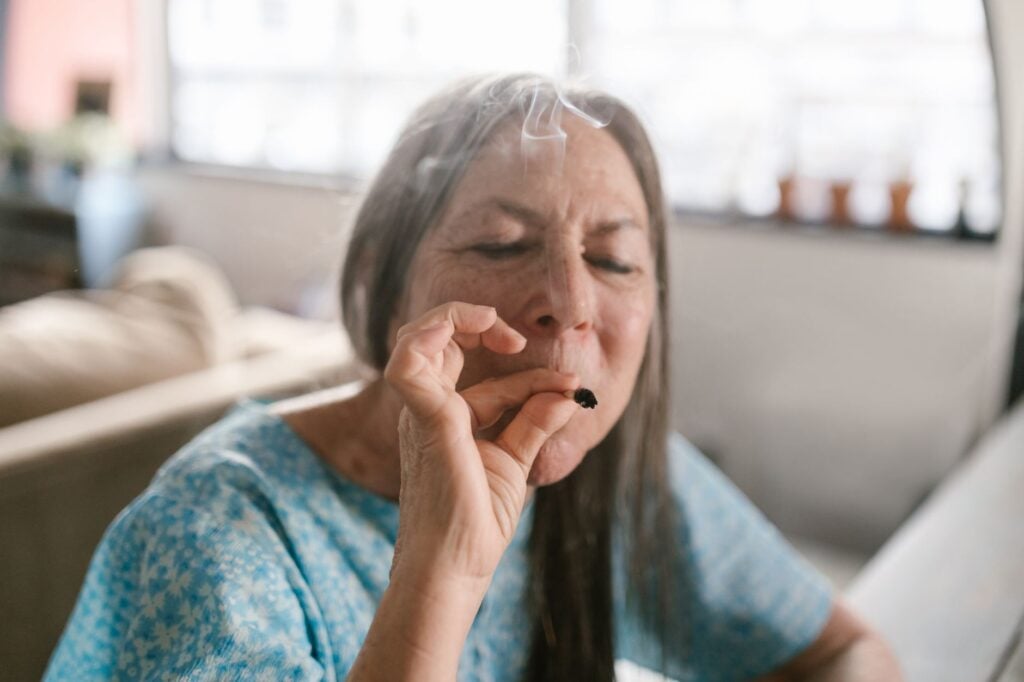
Cannabis for Parkinson’s disease can ease tremors, rigidity, and insomnia. MrGreen DC budtenders share the best strains and products. Visit us on Connecticut Ave.
● mrgreendc.com
4302 Connecticut Avenue NW, Washington DC
If you’re researching cannabis for Parkinson’s disease, you’re probably past the point of casual curiosity — you or someone you love is dealing with symptoms that don’t quit. Tremors that make a morning coffee feel like a negotiation. Rigidity that turns rolling over in bed into a whole event. I had a patient come in a few months ago, a retired government worker from Dupont Circle, who told me he hadn’t slept more than four hours straight in two years. His neurologist had him on a stack of medications, and they helped with some things, but the insomnia and muscle stiffness were grinding him down. We started talking about what cannabis might actually do for him — not miracle cures, not hype, just what I’ve seen work behind this counter and what the research is starting to confirm. That’s what this post is about. I’m going to walk you through the best strains, the right product formats, how to handle cannabis drug interactions, and exactly how to get your medical marijuana card DC through the DC medical marijuana program — which is way easier than most people think.
Why Patients Are Turning to Medical Cannabis DC for Parkinson’s Symptom Management
Parkinson’s disease hits on multiple fronts: motor symptoms like tremors and rigidity, non-motor symptoms like insomnia, anxiety, and chronic pain, and then the secondary stuff — depression, appetite loss, overall quality of life erosion. Standard medications (levodopa, dopamine agonists) do important work, but they don’t cover every symptom, and many patients deal with significant side effects from those drugs alone.
That’s where cannabis for Parkinson’s disease enters the conversation. The endocannabinoid system has receptors concentrated in the basal ganglia — the exact part of the brain involved in motor control and the exact area Parkinson’s damages. THC, CBD, and minor cannabinoids like CBN and CBG interact with those receptors in ways that can reduce tremors, ease muscle rigidity, improve sleep, and calm the kind of anxiety that keeps you staring at the ceiling at 3 AM.
Honestly, the most common question I get behind the counter from Parkinson’s patients isn’t “will this work?” — it’s “why didn’t my doctor mention this sooner?” I can’t answer that one, but I can tell you what I’ve seen actually help.
Best Indica Strains and Cannabis Products for Tremors, Rigidity, and Chronic Pain
Let’s get specific, because vague advice doesn’t help anybody.
For tremors and muscle rigidity, you want strains high in myrcene and caryophyllene. Myrcene is the terpene responsible for that deep body relaxation — it’s the reason certain indica strains make your muscles feel like they’re finally letting go. Caryophyllene works on CB2 receptors and has anti-inflammatory properties that directly address cannabis and chronic pain. Two strains I recommend regularly:
- Gelato Cake — heavy indica, packed with caryophyllene and limonene. Great for rigidity, great for pain, and it won’t leave you feeling foggy the way some sedating strains can. Shop Gelato Cake flower.
- Purple Urkle — a classic indica with a strong myrcene profile. This one is excellent for nighttime use when muscle stiffness and pain are keeping you from settling down. Shop Purple Urkle flower.
For daytime symptom management, I don’t usually point Parkinson’s patients toward heavy indicas. Something with pinene and a balanced THC:CBD ratio tends to keep tremors in check without putting you on the couch. A sativa-leaning hybrid or a low-dose tincture is often the better call during working hours.
Does Cannabis Actually Reduce Parkinson’s Tremors?
This is what everyone wants to know, and the honest answer is: for many patients, yes. A 2014 study out of Tel Aviv found significant improvement in tremor, rigidity, and bradykinesia (that’s the slowness of movement) after patients used cannabis. It’s not a guaranteed result — Parkinson’s is complex, and individual responses vary — but I’ve personally watched patients’ hands steady after using a small dose of a THC-dominant indica. That’s not a placebo. That’s real.

tremors and muscle rigidity
Cannabis Tinctures, RSO, and Edibles: The Best Product Formats for Parkinson’s Patients
Here’s the thing: flower is great, but a lot of Parkinson’s patients have hand tremors that make grinding, packing, and lighting a bowl genuinely difficult. That’s why I usually steer folks toward products that are easier to dose and easier to use physically.
Cannabis Tincture — The Most Practical Starting Point
A cannabis tincture is my top recommendation for Parkinson’s patients who are new to medical cannabis. You drop it under your tongue, hold for 30-60 seconds, done. Onset is about 15-20 minutes, effects last 4-6 hours, and you can control your dose down to the milligram. Our Motorbreath double-strength tincture is a solid option — indica-dominant, high in myrcene, and it comes with a measured dropper so there’s no guesswork.
Tinctures are also ideal for microdosing cannabis, which is exactly what I recommend for Parkinson’s patients in the beginning. Start with 2.5mg THC. Wait two hours. See how you feel. You can always take more; you can never take less. (No judgment — everyone has to figure out their dose, and even people who’ve used cannabis recreationally for years need to recalibrate when they’re using it medicinally.)
RSO for Parkinson’s — Full-Spectrum Power
Rick Simpson Oil is a full-spectrum extract that contains every cannabinoid and terpene the plant produces — THC, CBD, CBN, CBG, the whole crew. For patients dealing with multiple symptoms (pain + sleep + rigidity + anxiety), RSO can address several issues at once because you’re getting the full entourage effect rather than isolated compounds. Our RSO syringe (500mg) is perfect for controlled dosing — squeeze a rice-grain-sized amount onto food or under the tongue.
Cannabis Topicals for Localized Rigidity and Pain
Cannabis topicals don’t get you high. They do reduce localized pain and muscle tension. For patients with rigidity concentrated in specific areas — shoulders, hands, lower back — a topical with caryophyllene and menthol can provide targeted relief without any psychoactive effects. This matters for patients who need symptom management during the day but don’t want any cognitive changes at work or while driving.
Cannabis for Insomnia and Sleep Disturbances in Parkinson’s Disease
Sleep problems in Parkinson’s aren’t just “I can’t fall asleep.” They’re often brutal — REM sleep behavior disorder (acting out dreams physically), restless legs, frequent waking from pain or discomfort, and just flat-out insomnia. Standard sleep medications can interact badly with Parkinson’s drugs, which is partly why so many patients look into cannabis for insomnia.
For sleep specifically, I recommend an indica with heavy myrcene and linalool (that’s the same terpene found in lavender). CBN is also a big player here — it’s one of the most sedating cannabinoids, and products that combine THC with CBN tend to produce a deeper, more sustained sleep than THC alone. If you’re coming to our medical dispensary in Washington DC, ask about edibles or tinctures with CBN specifically — they’re worth seeking out.
Take your dose 45 minutes to an hour before bed. Keep it consistent. And here’s a tip I don’t see written anywhere: keep a small notebook on your nightstand and rate your sleep quality each morning on a 1-10 scale along with what you took and when. After two weeks, you’ll have real data to work with instead of guessing. That patient from Dupont Circle I mentioned earlier? He went from four hours of broken sleep to six-plus hours within three weeks using a low-dose RSO with CBN about an hour before bed.
Cannabis Drug Interactions: What Parkinson’s Patients Need to Know
Look, I’m not a pharmacist, and I’m not going to pretend to be one. But I’d be doing you a disservice if I didn’t bring up cannabis drug interactions, because Parkinson’s patients are almost always on multiple medications.
THC and CBD are both metabolized by the cytochrome P450 enzyme system in your liver — the same system that processes levodopa, MAO-B inhibitors, dopamine agonists, and a bunch of other common Parkinson’s meds. That means cannabis can potentially increase or decrease the levels of those drugs in your bloodstream. CBD is especially notable here because it inhibits CYP3A4 and CYP2D6 (seriously, these enzyme names matter when your medication list is three pages long).
What should you do about it?
- Tell your neurologist you’re using cannabis. Full stop. Most neurologists in the DC area won’t bat an eye — many are quietly supportive.
- Start with very low doses and increase slowly. This gives your body time to signal if something’s off.
- If you’re on blood thinners, antipsychotics, or any medication with a narrow therapeutic window, microdosing cannabis isn’t just smart — it’s necessary.
- Consider CBD-dominant products first if drug interactions are your primary concern. CBD has its own therapeutic benefits for rigidity and anxiety without the psychoactive load.
This isn’t fear-mongering. It’s basic harm reduction, and it’s the kind of thing a medical dispensary in Washington DC should be talking about openly. We do.
How to Get Your DC Medical Marijuana Card Through Self-Certification
If you don’t already have your card, here’s the part that surprises everyone: the DC medical marijuana program uses a self-certification process, and it’s wildly simple. You don’t need a doctor’s recommendation. You don’t need to prove your diagnosis to anyone. You don’t pay a fee.
Here’s exactly what you do:
- Go to the ABCA medical cannabis program website.
- Create an account, fill out the self-certification form, and upload a photo ID proving you’re 21 or older and a DC resident.
- Submit. That’s it. (Seriously, two minutes.)
Your medical marijuana card DC is issued by the ABCA — that’s the Alcoholic Beverage and Cannabis Administration. They regulate the entire program. And here’s what matters most for patients who work in government, hold security clearances, or just value their privacy: ABCA does not share your patient data with employers, federal agencies, or anyone. Your enrollment is protected by strict privacy laws. Zero career risk. (Yes, even your employer won’t know.)
Once you’re registered, you can shop at any licensed medical dispensary in DC — including MrGreen DC on Connecticut Avenue. You can also learn more about the process on our how to get a DC med card page.
Making Cannabis for Parkinson’s Disease Work Long-Term
This isn’t a one-and-done thing. Cannabis for Parkinson’s disease works best when you treat it like any other part of your care plan — with intention, consistency, and willingness to adjust. Here are the principles I walk every Parkinson’s patient through:
- Start low, go slow. Especially with edibles and tinctures. A 2.5mg dose is not embarrassingly small — it’s smart.
- Separate your daytime and nighttime products. A pinene-forward sativa or hybrid for daytime tremor and rigidity management. A myrcene-heavy indica or CBN product for sleep. Don’t use the same product for both.
- Track everything. Strain, dose, time of day, symptoms before and after. Two weeks of data tells you more than two months of guessing.
- Revisit your routine every 4-6 weeks. Tolerance changes. Symptoms change. Your medication stack might change. Stay flexible.
- Talk to your care team. Cannabis isn’t a replacement for your neurologist — it’s another tool in the toolbox.
The patients I see who get the most out of cannabis for Parkinson’s disease are the ones who approach it this way. Not as a magic fix, but as a real, adjustable part of their daily routine that handles what their other meds can’t. Check out our cannabis terpenes guide to understand exactly which terpenes address which symptoms — it’ll make your shopping decisions a lot clearer.

Cannabis for Parkinson’s disease isn’t theoretical anymore — patients across DC, from Capitol Hill to Logan Circle, are using it right now to manage tremors, sleep better, and get some of their quality of life back. If you’re ready to figure out what products make sense for your specific symptoms, come see us at MrGreen DC on Connecticut Avenue NW. Our budtenders will sit down with you, go through what you’re dealing with, and help you build a plan that actually works. Not in town? We offer cannabis delivery throughout DC — including Dupont Circle, Capitol Hill, and Logan Circle — straight to your door. Browse our cannabis menu, or just reach out with questions. We’re here for exactly this.