
Cannabis for neuropathy relief in DC — best strains, topicals, tinctures & tips for diabetic and peripheral nerve pain. Visit MrGreen DC on Connecticut Ave.
● mrgreendc.com
4302 Connecticut Avenue NW, Washington DC
If you’re searching for cannabis for neuropathy, you’re probably already tired of the runaround — the prescriptions that don’t quite cut it, the tingling that wakes you up at 3am, the numbness in your feet that makes walking around Dupont Circle feel like a chore. I get it. The most common question I hear behind the counter at MrGreen DC dispensary isn’t about getting high — it’s “what’s actually going to help my pain?” And over the past six years working in DC’s medical cannabis scene, I’ve watched more patients find real nerve pain relief from the right cannabis products than I can count. This post is everything I’d tell you face-to-face: the best strains for neuropathy in 2026, the products that actually make a difference for diabetic neuropathy and peripheral neuropathy, and the tips that separate patients who get results from those who give up too soon.
Why Cannabis and Chronic Pain Have Real Science Behind Them
Let’s get something straight. Cannabis for neuropathy isn’t some fringe idea anymore. There’s legitimate research — including studies out of UC Davis and the University of Michigan — showing that cannabinoids interact directly with the CB1 and CB2 receptors in your nervous system, and those receptors play a major role in how your body processes pain signals. That’s not marketing hype. That’s neuroscience.
Here’s the thing: neuropathic pain is fundamentally different from a broken bone or a sore muscle. Nerve pain involves misfiring signals. Your nerves are essentially screaming about damage that may or may not still be there, and traditional painkillers (even opioids) often do a terrible job at quieting that kind of noise. Cannabis works differently. THC modulates pain perception at the spinal cord level, while CBD reduces the inflammation that can irritate and compress nerves in the first place. Together, they don’t just mask the pain — they actually interrupt the signal chain.
I had a patient come in about three months ago, a retired teacher from Capitol Hill, who’d been dealing with diabetic neuropathy for over five years. She’d tried gabapentin, duloxetine, lidocaine patches — the whole pharmacy aisle. Nothing gave her more than a few hours of partial relief. Within two weeks of starting a balanced THC:CBD tincture and a cannabis cream for her feet, she told me she slept through the night for the first time in years. That’s not an isolated story. I hear some version of it almost every week.
So does cannabis help with neuropathy? Based on what I’ve seen and what the research supports — yes. Especially when you pick the right products and use them correctly.
Best Strains for Nerve Pain Relief in 2026
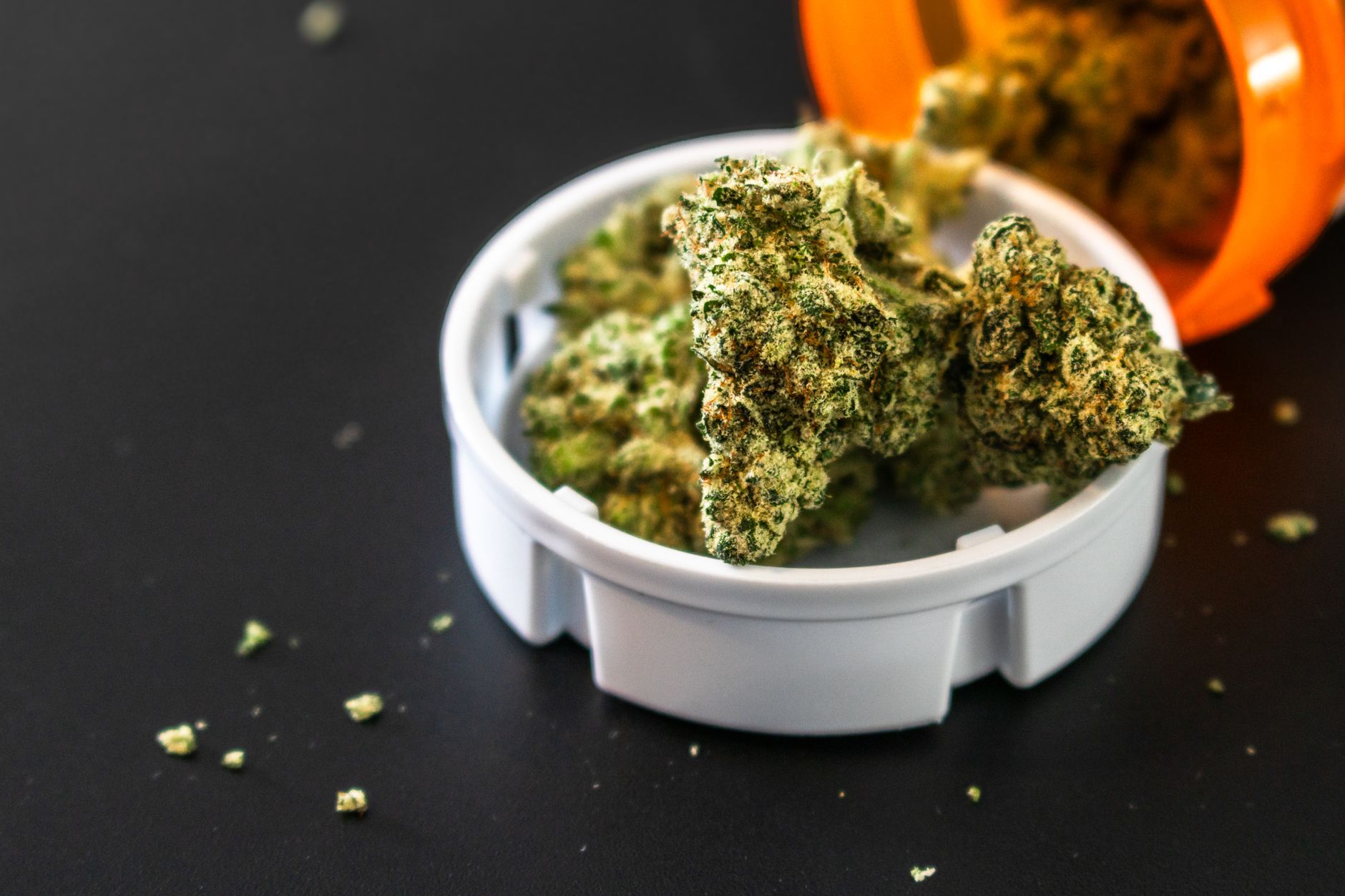
Not all flower is created equal when it comes to neuropathy. You need strains that are heavy in specific terpenes — particularly caryophyllene, myrcene, and linalool. These aren’t just flavoring agents. Caryophyllene literally binds to your CB2 receptor like a cannabinoid, which is why strains rich in it tend to have the strongest anti-inflammatory and analgesic effects. Myrcene promotes deep relaxation and enhances THC absorption, while linalool (the same compound that makes lavender calming) has its own analgesic properties.
Here are the indica strains and hybrids I actually recommend to neuropathy patients at our medical dispensary in Washington DC:
- Gelato Cake — Heavy indica, loaded with caryophyllene and limonene. Deep body relief without completely knocking you out. This is my go-to recommendation for peripheral neuropathy patients who need evening relief. Shop Gelato Cake flower.
- Motorbreath — If your nerve pain keeps you up at night, this one’s your answer. High myrcene content, strong sedating effects, and it hits fast. Patients with burning or tingling sensations in their extremities tend to respond really well to this profile.
- Purple Urkle — A classic indica that’s rich in linalool and myrcene. It’s gentler than Motorbreath but still delivers significant pain relief. I recommend this for patients who are newer to cannabis or who want to stay functional. Shop Purple Urkle flower.
- Sundae Driver — A balanced hybrid that’s surprisingly effective for daytime nerve pain management. Good limonene and caryophyllene levels, and it won’t glue you to the couch.
Honestly, the biggest mistake I see is patients grabbing whatever has the highest THC percentage. That’s not how this works. A 22% THC strain with a strong caryophyllene and myrcene profile will outperform a 30% THC strain with the wrong terpenes for neuropathy every single time. Check our cannabis menu and ask us about terpene profiles — we’ll steer you right.
caryophyllene
What Cannabis Products Are Good for Pain? Topicals, Tinctures, and Beyond
Flower is great, but it’s only one piece of the puzzle. For neuropathy specifically, I’ve found that the most successful patients combine two or three different product types — what you might call a layered approach. Here’s how I break it down:
Cannabis Topicals and Transdermal Patches
If you’ve got localized tingling or burning — especially in your hands or feet — a cannabis cream or cannabis transdermal patch can be incredibly effective. Regular topicals (creams, balms, salves) don’t enter your bloodstream, so you won’t feel any psychoactive effects. They work locally, right where you apply them, targeting the peripheral nerves in that area. Transdermal patches are different — they actually deliver cannabinoids through your skin and into your blood over several hours, providing whole-body relief. For patients who can’t smoke or who need all-day coverage (like folks who work government jobs near Logan Circle and need to stay sharp), transdermal patches are a seriously underrated option.
Cannabis Tinctures for Sustained Relief
A cannabis tincture is one of my top recommendations for neuropathy patients. You dose it under your tongue, it kicks in within 15–30 minutes, and effects can last four to six hours. That’s way more predictable than edibles. Our Motorbreath double-strength tincture is popular for a reason — it’s potent, it’s consistent, and patients can dial in their exact dose over time. Start low (2.5–5mg THC), give it 45 minutes, and adjust from there.
RSO for Severe Nerve Pain
For patients dealing with severe diabetic neuropathy or chemo-induced peripheral neuropathy, RSO (Rick Simpson Oil) is worth a serious look. It’s a full-spectrum concentrate — meaning it contains the full range of cannabinoids including THC, CBD, CBN, and CBC — along with all the plant’s terpenes. That entourage effect matters a lot for chronic pain management. You can take it orally, add it to food, or even apply it topically. Our RSO syringe (500mg) is a solid starting point.
Balanced THC:CBD Products
Can CBD oil help nerve pain? Short answer: yes, but it works best alongside THC. CBD for pain on its own has anti-inflammatory properties and can reduce neural inflammation, but THC adds the analgesic punch that most neuropathy patients need. A balanced THC CBD ratio — like 1:1 or 2:1 — tends to be the sweet spot. You get real pain relief with fewer psychoactive side effects than a high-THC product would give you. This is especially useful for patients who are new to medical cannabis or who are microdosing cannabis during daytime hours.
Microdosing Cannabis for Neuropathy: Why Less Is Often More
Look, I know it’s counterintuitive. You’re in pain, so shouldn’t you take more? Not necessarily. Microdosing cannabis — taking small, controlled doses of 2.5 to 5mg THC — has shown real promise for neuropathic pain, and I’ve seen it work firsthand. The idea is to keep your endocannabinoid system gently activated throughout the day without overwhelming it. Many patients find that a small tincture dose in the morning and another in the afternoon provides steadier relief than one large dose at night.
This works especially well for patients who need to stay productive. We’ve got patients all over Shaw and the U Street Corridor — U Street cannabis delivery is one of our most popular routes — who microdose during the workday and then use a stronger indica strain at night. That daytime/nighttime split is something I recommend to almost every neuropathy patient who walks through our door.
And here’s a detail most people miss: CBN (cannabinol) is showing up in more and more products, and there’s early evidence it’s particularly useful for pain when combined with THC. It’s mildly sedating on its own, but combined with THC and caryophyllene-rich strains, it seems to amplify the pain-relieving effects. Keep an eye on CBN products in 2026 — they’re going to be a big deal for chronic pain patients.
Getting Your Medical Marijuana Card in DC Is Easier Than You Think
If you don’t already have your medical marijuana card DC, let me save you some anxiety: it’s genuinely simple. DC uses a self-certification program run by the ABCA (Alcoholic Beverage and Cannabis Administration). You don’t need a doctor’s recommendation. You don’t need to prove a diagnosis. If you’re 21 or older, you go to the ABCA website, self-certify as a patient, and you’re done (seriously, two minutes). There’s no fee.
The question I get most often — and I mean almost daily — is about privacy. People are worried their employer will find out, especially federal employees who make up a big chunk of our patient base from neighborhoods like Capitol Hill and Georgetown. Here’s the reality: ABCA does not share your patient data with employers, federal agencies, or anyone. Your registration is confidential. Period. You’re protected, and there’s zero career risk from getting your card (yes, even your employer won’t know).
Once you’re registered, you can shop at any licensed dispensary near you in Washington DC — including us on Connecticut Avenue NW. If you want a step-by-step walkthrough, our guide to getting a DC med card has everything laid out.
Common Mistakes Neuropathy Patients Make with Cannabis
After six years behind the counter, I’ve noticed patterns. Here are the mistakes I see neuropathy patients make most often — and how to avoid them:
- Choosing only edibles for pain management. Edibles are great for sleep, but they take 60–90 minutes to kick in and the dosing is hard to control. For neuropathy, you need something with a faster onset and more predictable duration. Tinctures and vaporized flower are better starting points.
- Ignoring topicals entirely. A cannabis cream applied directly to your feet, hands, or wherever the tingling is worst can provide localized relief within minutes. It’s not a replacement for systemic cannabinoids, but it’s a powerful complement.
- Going straight for the strongest THC product. More THC doesn’t mean more pain relief. In fact, some research suggests that moderate doses are more effective for neuropathic pain than high doses. Start low, go slow, find your minimum effective dose.
- Not giving it enough time. Cannabis isn’t like popping an ibuprofen. Some patients — especially those using cannabis and inflammation-reducing strategies together — don’t notice the full benefit until they’ve been consistent for two to three weeks. Stick with it.
- Skipping the terpene conversation. I can’t stress this enough. Walk into our store, tell us you’re dealing with peripheral neuropathy or diabetic neuropathy, and we’ll point you toward strains and products with the right terpene profiles. That five-minute conversation (no judgment, everyone asks) can save you weeks of trial and error.
Using cannabis for neuropathy isn’t about finding a magic bullet — it’s about building a routine that actually matches your body and your life. The right strain, the right product format, the right dose. That combination is different for every patient, and it’s exactly the kind of thing our budtenders are trained to help you figure out. Whether you’re dealing with diabetic neuropathy, peripheral neuropathy from chemo, or nerve damage you can’t explain, cannabis for neuropathy is a real option backed by real science and real patient experience.
We’re at MrGreen DC on Connecticut Avenue NW, and we’d love to help you find what works. Come visit our store, check out our products in person, or order cannabis delivery straight to your door anywhere in DC — including Dupont Circle, Shaw, and beyond. Bring your questions. That’s literally what we’re here for.