
Cannabis for arthritis pain relief in DC — a budtender’s guide to the best strains, topicals, and tinctures for joint inflammation. Visit MrGreen DC on Connecticut Ave.
● mrgreendc.com
4302 Connecticut Avenue NW, Washington DC
If you’re researching cannabis for arthritis, you’re probably tired of the runaround — from doctors who shrug, from articles that say “more research is needed” and leave it at that. I get it. I’ve been working in the DC medical cannabis industry for six years now, and arthritis patients make up a huge chunk of the people I talk to every single week behind the counter at MrGreen DC dispensary on Connecticut Avenue. Just last month, a retired Capitol Hill staffer came in with hands so stiff she couldn’t open the jar I handed her. She’d been managing rheumatoid arthritis for over a decade, tried every NSAID on the shelf, and her gastroenterologist finally told her the pills were shredding her stomach lining. She needed something different. That conversation — the one where somebody’s genuinely hurting and genuinely skeptical — is the reason I wrote this post. You’ll get my honest take on the best strains, products, and anti-inflammatory cannabis options for managing arthritis pain right here in DC.
Why Cannabis and Chronic Pain Have Such a Strong Connection
Your body already has an endocannabinoid system. It’s not some hippie theory — it’s actual biology, discovered in the early ’90s. This system has CB1 and CB2 receptors scattered throughout your joints, immune cells, and nervous system, and they directly influence how you experience pain and inflammation. When cannabis compounds like THC and CBD interact with those receptors, they can dial down the inflammatory signals that make your knuckles throb at 6am.
Here’s the thing: arthritis isn’t one disease. Osteoarthritis is wear-and-tear — cartilage breaks down, bones grind, and your body sends inflammatory cells to a party nobody wanted. Rheumatoid arthritis is autoimmune — your immune system attacks your own joint tissue because it’s confused and aggressive. Both involve chronic inflammation, but the mechanisms differ. That matters when you’re picking products, because cannabis and inflammation interact differently depending on whether you need localized relief or system-wide immune modulation.
The most common question I get behind the counter is, “Will this actually work, or is it just hype?” My answer’s always the same: cannabis won’t regrow your cartilage. It won’t cure RA. But it can meaningfully reduce pain, improve sleep (which your body needs to manage inflammation), and let you cut back on pharmaceuticals that come with their own nasty side effects. For a lot of my patients, that’s not a small thing — it’s everything.
Best Indica Strains and Anti-Inflammatory Cannabis Flower for Arthritis
Not all flower is created equal when it comes to joint pain. You want strains with specific terpene profiles that lean anti-inflammatory, and you want enough THC to actually move the needle on pain — not just make you giggly. Here’s what I actually recommend to arthritis patients, based on what works and what people come back for.
Gelato Cake is my go-to suggestion for evening arthritis relief. It’s a heavy indica with a terpene profile loaded with caryophyllene — the only terpene that directly binds to CB2 receptors, which are concentrated in immune tissue and joints. Patients dealing with rheumatoid arthritis inflammation consistently tell me this one takes the edge off within 15 minutes. The myrcene content helps with sedation too, so if your pain’s keeping you up at night, this is your strain. Shop Gelato Cake flower and see for yourself.
Motorbreath is another powerhouse. It’s pungent — like, your-neighbors-will-know pungent — but the caryophyllene and limonene combo makes it genuinely effective for pain and mood. A lot of arthritis patients deal with depression alongside their physical symptoms (no surprise when you’re in pain every day), and limonene has documented mood-lifting properties. We also carry it as a Motorbreath tincture for patients who don’t want to smoke.
Purple Urkle rounds out my top three for indica strains that target inflammation. High in myrcene and linalool (the same terpene that makes lavender calming), it’s deeply relaxing without being completely incapacitating. I’ve had patients in the Dupont Circle area who use this specifically for their hands and wrists — they’ll vape a small amount, then apply a topical on top for a one-two punch. Want to learn more about how terpenes actually work? Check out our cannabis terpenes guide.
Gelato Cake
Cannabis Topicals, Tinctures, and RSO: The Best Products for Joint Pain
Flower’s great, but it’s not the only tool in the box. Honestly, for a lot of arthritis patients — especially those managing osteoarthritis in specific joints — cannabis topicals and other non-inhalation products are where the real wins happen.
Cannabis Cream and Topical Products
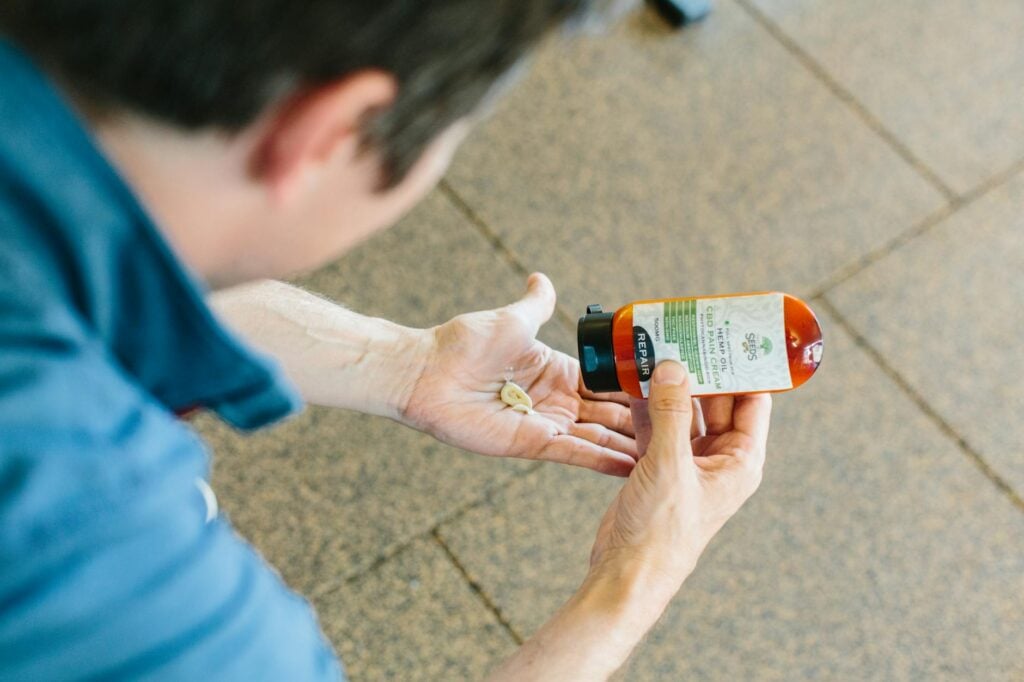
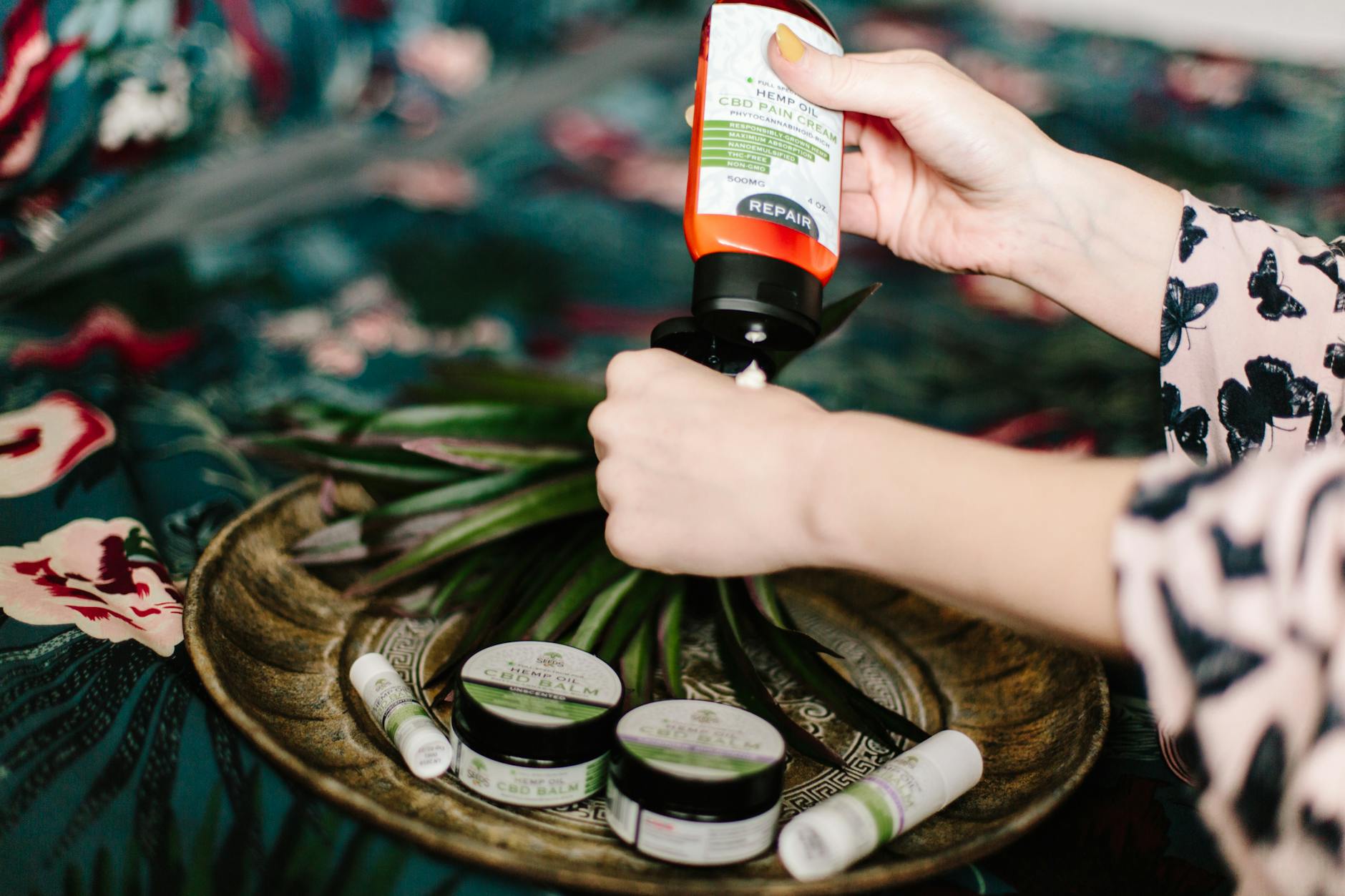
A good cannabis cream works locally. You rub it into your knee, your wrist, your shoulder, and the cannabinoids interact with CB receptors right there in the skin and underlying tissue without producing a systemic high. That’s huge for patients who need to function during the day — go to work, drive, handle their business. The best topicals use full-spectrum cannabis extract rather than isolate, because you get the entourage effect: THC, CBD, and terpenes all working together. If someone asks me whether CBD alone is enough for a topical, I’ll be straight — it helps, but full spectrum cannabis topicals consistently outperform CBD-only products for pain in my experience.
Cannabis Tinctures for Sustained Relief
A cannabis tincture taken sublingually (under the tongue) hits in about 15–20 minutes and lasts 4–6 hours. That’s a much more manageable duration than edibles, and the onset is way more predictable. For arthritis patients who wake up stiff every morning, a tincture dose before bed can mean waking up with noticeably less inflammation. Our double-strength Motorbreath tincture is alcohol-based, which extracts a broader range of compounds than MCT oil carriers. It’s strong — start with half a dropper if you’re new to this (no judgment, everyone asks about dosing).
RSO for Severe Chronic Inflammation
RSO — Rick Simpson Oil — is the heavy artillery. It’s a full-plant extract with extremely high THC concentrations, and it’s what I point patients toward when they’re dealing with severe, systemic inflammation that lighter products can’t touch. We carry both 500mg RSO syringes and 2500mg RSO syringes. A grain-of-rice-sized dose is all you need to start. Patients using RSO for rheumatoid arthritis often report that their morning stiffness duration drops significantly after consistent use over a few weeks. It’s not instant gratification — it’s a long game.
Does CBD for Pain Actually Work Without THC?
I hear this one daily. Someone’s read about CBD for pain online and wants to know if they can skip THC entirely. Here’s my honest take: CBD has legitimate anti-inflammatory properties. Studies show it inhibits TNF-alpha and other pro-inflammatory cytokines. That’s real science, not marketing.
But for most arthritis patients dealing with moderate to severe pain, CBD alone isn’t enough. THC is a significantly stronger analgesic — it changes how your brain processes pain signals, not just how your body produces inflammation. The sweet spot for most of my patients is a ratio product: something with both THC and CBD, like a 1:1 or 2:1 tincture. The CBD tempers the psychoactive effects of THC while adding its own anti-inflammatory contribution. You stay functional. Your joints stop screaming. Everybody wins.
If you’re working a federal job in the Shaw or Logan Circle area and you’re worried about drug testing, I understand the concern completely. But that’s a conversation about your specific situation, and it’s exactly why DC’s medical program offers protections that random CBD products from a gas station never will. More on that below.
How to Get Your Medical Cannabis Card in DC (It’s Easier Than You Think)
A lot of people assume becoming a medical cannabis patient DC involves jumping through hoops — doctor visits, fees, waiting periods. It doesn’t. DC uses a self-certification system run by the ABCA (Alcoholic Beverage and Cannabis Administration). If you’re 21 or older, you go to the ABCA website, fill out the self-certification form, and you’re done (seriously, two minutes). No doctor’s appointment. No fee. No waiting room. You can walk into a licensed cannabis dispensary DC like MrGreen the same day.
Look, I know the real concern for most people isn’t the process — it’s privacy. Can your employer find out? Will your federal security clearance get flagged? The answer is no. ABCA does not share your patient data with employers, federal agencies, or anyone. Your information is protected under DC’s medical cannabis regulations. Period. I’ve had patients who work at three-letter agencies quietly managing their arthritis through our program without a single issue. Zero career risk. The legal framework exists specifically to protect you.
For detailed instructions on the entire process, we’ve put together a step-by-step walkthrough — check out our guide on how to get a DC med card.
Practical Tips for Using Cannabis for Arthritis Daily
Getting the right products is only half the equation. How you use them matters just as much. After six years of conversations with arthritis patients, here’s what I’ve learned actually makes a difference:
- Layer your approach. Use a topical on the worst joints during the day and a tincture or small amount of flower at night. Treating inflammation from multiple angles — local and systemic — produces better results than relying on one product alone.
- Keep a simple journal. Track what you used, how much, and how your pain was on a 1–10 scale the next morning. Most patients figure out their ideal routine within two to three weeks.
- Don’t skip consistency. Cannabis and chronic pain management works best when you maintain steady cannabinoid levels in your system. A tincture every evening is more effective than sporadic heavy sessions.
- Start low, especially with edibles and RSO. Arthritis patients tend to be older, and many haven’t used cannabis in decades — or ever. There’s no award for taking too much on day one.
- Prioritize sleep. Indica-dominant strains at night aren’t just about pain relief. Sleep is when your body does its deepest anti-inflammatory repair work. If cannabis helps you sleep seven hours instead of five, your joints will thank you in the morning.
I also want to address something I see too often: patients buying random cannabis topicals or CBD products from unlicensed sources. If it doesn’t come from a licensed dispensary with lab-tested products, you genuinely don’t know what’s in it. You don’t know the cannabinoid content, you don’t know if there are pesticides, and you can’t dose accurately. For something you’re putting on inflamed joints or ingesting daily, that matters. Browse our cannabis menu to see exactly what’s available with full lab testing behind every product.

Managing arthritis is a long road, and there’s no single product that works for everyone. But cannabis for arthritis is one of the most effective tools available to DC medical patients right now — for pain, for inflammation, and for getting some quality of life back. Whether you’re in Adams Morgan, Capitol Hill, or anywhere else in the District, our team at MrGreen DC on Connecticut Avenue NW is ready to help you figure out exactly what fits your situation. Stop by our store, or if your joints are telling you to stay put today, take advantage of our cannabis delivery DC service — we deliver throughout DC and to addresses near the DC/Maryland and DC/Virginia borders. You don’t have to white-knuckle through another day. Shop Now — MrGreen DC menu and let’s get you some relief.