
What is THCA? MrGreen DC breaks down THCA vs THC, decarboxylation, label reading, and raw cannabinoid benefits for DC medical patients. Visit us on Connecticut Ave.
● mrgreendc.com
4302 Connecticut Avenue NW, Washington DC
So, what is THCA? It’s the most common question I get behind the counter that people don’t even know they should be asking. Last week a patient from Dupont Circle came in, pointed at a jar of flower testing at 28% THCA, and said, “Wait — this says THCA, not THC. Is this even going to work?” That conversation lasted twenty minutes, and honestly, it changed how he shops for cannabis entirely. If you’re a medical cannabis patient in DC — or thinking about becoming one — understanding THCA vs THC isn’t just nerdy science. It’s the difference between reading your label correctly and buying blind. I’m going to break down what THCA actually is, how cannabis decarboxylation works, why raw cannabinoids matter, and what forms of cannabis are sold in DC that let you use this knowledge right now.
What Is THCA and Why Isn’t It THC?
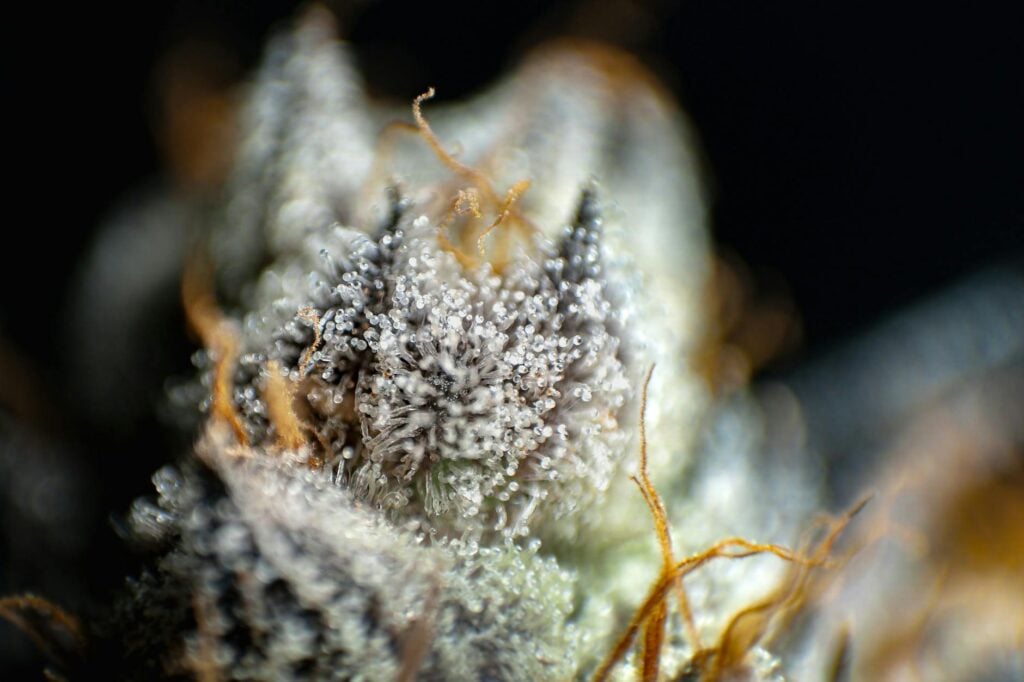
THCA stands for tetrahydrocannabinolic acid. It’s the raw, unheated form of THC that lives in every cannabis plant while it’s growing. Fresh flower? That’s almost entirely THCA, not THC. The plant doesn’t actually produce significant amounts of delta-9 THC on its own — it produces the acidic precursor, and then heat does the rest.
Here’s the thing: THCA won’t get you high. Not on its own. It’s a non-intoxicating cannabinoid, which means if you ate a raw cannabis bud straight off the plant (please don’t, it tastes terrible), you wouldn’t feel that classic euphoric effect. The molecule has an extra carboxyl group — a little chemical tail — that prevents it from fitting into your CB1 receptors the way THC does. That matters because CB1 activation is what produces the psychoactive experience patients associate with cannabis.
So what is THC, then? THC is what THCA becomes after heat strips away that carboxyl group. That process has a name: decarboxylation. Every time you light a joint, heat a vaporizer, or bake an edible, you’re converting THCA into THC. It happens fast — a lighter flame does it almost instantly. An oven at 220°F takes about 30 to 45 minutes. The method changes the speed, but the chemistry’s the same.
Does THCA Show Up on a Drug Test?
I get this one constantly (no judgment, everyone asks). Standard drug tests look for THC metabolites, specifically THC-COOH. If you consume THCA in its raw form and it doesn’t convert to THC in your body, theoretically it shouldn’t trigger a positive result. But here’s the reality: some conversion can happen during digestion, and most THCA products aren’t perfectly free of delta-9 THC. I’d never tell a patient they’re safe to pass a test while using any cannabis product. Play it careful.
THCA vs THC: Cannabis Decarboxylation Explained Simply
The THCA vs THC distinction trips people up because labels make it confusing. When you look at high THC flower on our cannabis menu, you’ll notice the big number is usually THCA percentage, not THC. A strain testing at 30% THCA might show only 0.3% THC. That doesn’t mean the flower is weak — it means it hasn’t been heated yet.
Cannabis decarboxylation is just a fancy word for “add heat, lose a molecule, gain psychoactivity.” Here’s the rough math most budtenders use: multiply the THCA percentage by 0.877 (because you lose some molecular weight when that carboxyl group drops off), then add whatever THC is already listed. So a flower with 28% THCA and 0.5% THC gives you roughly 25% total potential THC. That’s your actual potency if you smoke or vape it.
Learning how to read a cannabis label this way is one of the single most useful things you can do as a medical cannabis patient in DC. Most people just look at the biggest number and assume that’s their potency. It’s close, but not exact, and when you’re dosing for medical purposes — pain, nausea, insomnia — precision matters more than you’d think.

The Benefits of Raw THCA: What Research and Real Patients Say
Honestly, the research on raw THCA is still catching up to what patients have been reporting for years. But what we do have is promising. Preclinical studies suggest THCA has anti-inflammatory properties, potential neuroprotective effects, and may help with nausea — all without producing intoxication. That last part is huge for patients who need symptom relief during the workday or while driving.
Is THCA Anti-Inflammatory?
Multiple studies have shown THCA can inhibit COX-2 enzymes, which are the same targets that drugs like ibuprofen go after. I’ve had patients who juice raw cannabis leaves or use raw flower in smoothies specifically for this reason. Is it a replacement for your prescribed anti-inflammatory? That’s between you and your doctor. But as a supplemental option, raw THCA is something worth knowing about.
The cannabis entourage effect plays a role here too. Full spectrum cannabis products — where you’re getting THCA alongside other cannabinoids like CBD, CBG, and CBN, plus terpenes like myrcene, caryophyllene, and limonene — tend to produce more well-rounded effects than isolated compounds. That’s why I always steer patients toward whole-plant products when possible. A strain like Gelato Cake, for instance, brings caryophyllene-heavy terpene profiles that may amplify anti-inflammatory benefits alongside whatever THCA is doing on its own. You can Shop Gelato Cake flower and see for yourself.
Can You Get High from THCA?
Not from raw THCA, no. But the second you apply heat, you’re converting it to THC, and then yes — absolutely. This is why THCA flower is essentially identical to regular cannabis flower in practice. If you smoke THCA flower, you’ll feel the same effects as any high THC flower. The distinction only matters when you’re consuming it raw or reading a lab report.
Some patients from the Capitol Hill and Shaw neighborhoods have told me they specifically keep a small stash of raw flower for juicing alongside their regular smoking supply. Two different uses from the same plant. That’s the beauty of understanding what is THCA at a practical level — it opens up options you didn’t know you had.
THCA Flower and Product Options at a DC Dispensary
So what forms of cannabis are sold in DC that are relevant here? As a medical dispensary in Washington DC, we carry flower, pre-rolls, concentrates, tinctures, edibles, RSO, and vape cartridges. Every single flower product on our shelf is technically a THCA product until you heat it. That’s not marketing spin — it’s chemistry.
But there’s a specific reason THCA flower has become a buzzword lately. In some states, products marketed as “THCA flower” exploit a legal loophole in the 2018 Farm Bill — they’re hemp-derived plants bred to have high THCA but under 0.3% delta-9 THC, which technically makes them federally legal. Here in DC, that distinction doesn’t really apply the same way. Our medical cannabis program is regulated by the ABCA (DC’s Alcoholic Beverage and Cannabis Administration), and the flower you buy from a licensed dispensary on Connecticut Avenue is tested, tracked, and legitimate. You don’t need to play label games.
If you want high-potency THCA flower that converts into serious THC when smoked, something like Motorbreath is a great pick — it runs heavy on myrcene and limonene with THCA numbers that don’t mess around. Shop Motorbreath flower if that sounds like your speed.
For patients interested in the entourage effect and full spectrum cannabis, concentrates like live sugar preserve more of the original terpene and cannabinoid profile than cured products. Our Pavé live sugar is a solid example — it retains a broader range of compounds including residual THCA that converts during dabbing. Check out our cannabis terpenes guide if you want to learn more about matching terpene profiles to your symptoms.
Getting Your Medical Cannabis Card in DC: Easier Than You Think
Look, if you’re reading this and you don’t have your DC medical cannabis card yet, here’s your sign. The process through ABCA is self-certification — meaning anyone 21 or older can apply online, it takes about two minutes (seriously, two minutes), there’s no fee, and you don’t need to visit a doctor. That’s it. No appointment, no waiting room, no hoops.
The question I hear most from patients in Logan Circle and the U Street Corridor is about privacy. People with federal jobs, security clearances, or government-adjacent careers worry that registering will flag them somehow. It won’t. ABCA does not share your patient data with employers, federal agencies, or anyone else. Your registration is protected. Zero career risk. I’ve had congressional staffers, DOD contractors, and teachers all register without a single issue. The ABCA medical cannabis program page has all the details if you want to read the fine print yourself, or you can check our step-by-step DC med card guide.
Once you’re registered, you can shop at any licensed DC dispensary, including ours on Connecticut Avenue NW. You can also order cannabis delivery DC-wide — we deliver throughout Washington DC, including to addresses near the DC/Maryland and DC/Virginia borders.
Understanding what is THCA isn’t just trivia — it’s the foundation for making smarter choices about your medicine. Once you know the difference between THCA and THC, can do the quick decarboxylation math in your head, and understand why full spectrum matters, you’re shopping like a patient who actually knows what they’re putting in their body. That’s the goal every time someone walks through our door.
Whether you’re in Adams Morgan, Columbia Heights, or anywhere else in the District, our team at MrGreen DC is ready to answer every question you’ve got — about THCA, terpenes, dosing, whatever’s on your mind. Stop by our dispensary on Connecticut Avenue NW, or order same-day weed delivery and we’ll bring it to you. Your cannabis should work for you, and knowing your cannabinoids is step one.